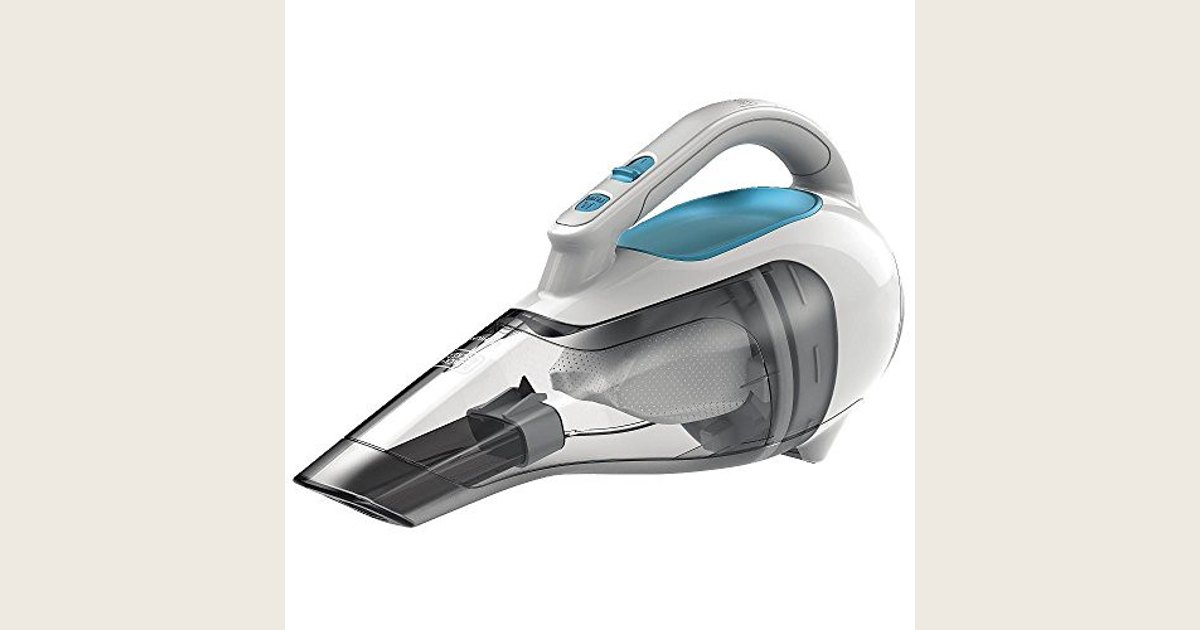
For cleaning a car interior, the specification that decides whether a cordless vacuum is worth owning is runtime at full power, not the suction number on the box. A handheld that pulls hard for four minutes and then fades will not get you through a single row of seats, let alone a whole car. Buy for sustained airflow over a 15- to 20-minute session, a filter you are willing to wash, and a crevice tool narrow enough to reach seat rails — in that order. The headline suction figure is the least comparable number on the listing.
Key Takeaways
- Suction figures in kPa or Pa measure sealed pressure with no air moving. They say nothing about how much debris a vacuum actually lifts off carpet, so they can’t be compared across brands.
- Runtime claims are usually measured on the lowest power setting. Assume the high-power figure is a fraction of it, and check whether the battery is removable.
- Filters clog fast in a car. A washable filter you can rinse and fully dry is the difference between a vacuum that lasts years and one that feels dead in three months.
- If you vacuum your car twice a year in a garage with an outlet, a corded vacuum or the free vacuum at a car wash does the job better for less money.
What a car interior actually demands
The debris is heavy and embedded: grit, road salt, sand, dried mud, crushed cereal, pet hair woven into short-pile carpet. Lifting that takes moving air, not just negative pressure. The spaces are tight and awkward — seat rails, the gap between console and seat, the seam where the backrest meets the cushion — so nozzle shape matters as much as motor power. And a full interior takes longer than people expect, which is where battery-powered tools fail.
The EPA notes that dust mite allergens live in carpets and upholstered furniture, recommends vacuuming fabric surfaces with a HEPA-filtered vacuum, and advises that people with asthma or allergies leave the area being vacuumed (EPA, Asthma Triggers: Gain Control). That guidance is written for homes, not cars, but a car cabin is a small upholstered box with poor ventilation, so the sensible adaptation is to open both doors and work from outside rather than sitting inside with the vacuum running.
How to read the suction number (and why you mostly shouldn’t)
Three different units show up on cordless vacuum listings, and they are not interchangeable.
Pascals or kilopascals (Pa / kPa) describe sealed suction — the pressure the motor generates when the inlet is fully blocked and no air is flowing. That is not the condition you vacuum in, which is air rushing through the nozzle. A vacuum advertising a large Pa figure may still have weak airflow through a real attachment.
Air watts (AW) combine airflow and suction pressure into one figure and correlate better with cleaning ability. The catch: most handheld brands do not publish air watts, and the ones that do measure at the motor rather than at the end of a crevice tool.
Motor watts or amps describe electricity consumed, not air moved. A bigger number here can simply mean a less efficient motor.
Practical rule: compare suction figures only within one brand’s own product line, where the test method is at least consistent. Across brands, treat all of them as marketing and judge the vacuum on airflow you can feel, nozzle design, and filter behavior instead.
Runtime is the spec that decides the purchase
A quoted runtime is almost always the lowest power setting with no brush attachment drawing current. Most cordless vacuums have a boost or max mode that drains far faster, and a car’s carpet is exactly where you need boost.
What to look for, in order:
- A stated high-power runtime. If the listing only gives one number, assume it’s the eco figure.
- A removable battery, or at minimum a second-battery option. A sealed battery means the whole tool is disposable when the cells age.
- Fade behavior. A gradual taper is worse for cleaning than a clean cutoff, because you keep working with a vacuum that is no longer lifting grit.
- Charge time. A vacuum that runs 10 minutes and recharges in 4 hours is a one-row-per-evening tool.
Voltage (12V, 18V, 21.6V nominal) tells you the cell configuration, not the capacity. Capacity is amp-hours (Ah) or watt-hours (Wh). A high-voltage tool with a small pack can easily run shorter than a lower-voltage one with a bigger pack.
Filters: the part that quietly determines everything
Filters are where car vacuums live or die, because car debris is fine, dry, and abundant. A clogged filter kills airflow long before the motor or battery gives out.
What “HEPA” means and what it doesn’t
HEPA is a defined standard, not a vibe. The EPA describes a HEPA filter as a pleated mechanical filter that can theoretically remove at least 99.97% of particles at 0.3 microns — the hardest-to-capture size, with both larger and smaller particles captured at higher efficiency (EPA, What is a HEPA filter?). That page addresses air purifiers and does not discuss marketing variants like “HEPA-style” or “HEPA-type.” Those terms have no equivalent definition behind them, so a listing using them is not making the same claim as one stating a true HEPA rating.
For most car cleaning this matters less than it sounds. What a filter mainly does in a handheld is protect the motor and stop fine dust blowing back at you. A multi-stage setup — mesh screen plus pleated filter — clogs more slowly than a single pleated element.
The maintenance you’re signing up for
The EPA’s guidance on home filtration applies in spirit: filters need regular attention, and a dirty, overloaded filter doesn’t work well (EPA, Guide to Air Cleaners in the Home). That document covers room air cleaners and HVAC filters rather than vacuums, so treat it as the general principle, not a maintenance schedule for your model.
The realistic burden with a car vacuum:
- Tap the filter out after every session, outdoors.
- Rinse washable filters when suction drops, and dry them completely before reinstalling — a damp filter clogs instantly and can grow mold inside the housing. Follow the drying time in your model’s manual; a filter that feels dry to the touch often isn’t.
- Buy a spare filter with the vacuum if one is offered. One in use, one drying is the only way to keep cleaning during the wait.
- Replace non-washable filters on the manufacturer’s schedule, and check the replacement is still sold before you buy.
Attachments, bin size, and the parts nobody lists
| Feature | What to look for | Why it matters in a car |
|---|---|---|
| Crevice tool | Long, flat, narrow tip | Seat rails and the console gap are the dirtiest spots and the hardest to reach |
| Brush tool | Stiff bristles, not soft dusting bristles | Soft brushes glide over embedded grit; stiff ones agitate it loose |
| Motorized mini-head | Optional; drains battery fast | Only worth it for pet hair in carpet |
| Bin capacity | Larger is fewer interruptions | Small bins choke airflow well before they look full |
| Bin emptying | One-button bottom release | Reaching in with fingers redistributes the dust you just collected |
| Hose or flexible neck | Helps under seats | Rigid nozzles can’t reach the footwell under the front seats |
| Weight and balance | Front-heavy tools tire your wrist | You’ll hold it at arm’s length for most of the job |
One underrated point: empty the bin when it’s roughly half full, not when it’s packed. In cyclonic handhelds, a filling bin reduces the effective air path and suction drops well before capacity is reached.
Wet pickup: read the manual, not the marketing
“Wet/dry” on a small cordless vacuum usually means small liquid spills on hard surfaces, not soaked carpet and not a cleaning solution you’ve sprayed in. Many handhelds are dry-only, and pulling liquid through a dry-only filter ruins the filter and can reach the motor.
No manufacturer manuals were reachable while researching this guide, so treat this as general caution rather than a model-specific instruction: never vacuum liquids, hot ash, cigarette butts, or anything flammable unless your model’s manual explicitly permits it. The warnings section of the manual is the authority here, not the product page.
When you don’t need to buy one
A cordless car vacuum is a convenience purchase. Skip it if:
- You have a garage outlet and clean a couple of times a year. A corded vacuum with a hose has unlimited runtime and stronger sustained airflow for less money.
- Your car wash has free vacuums. Those are high-powered central units, and they’ll out-clean any handheld.
- You already own a shop vac. Add a car detailing attachment kit — narrow crevice tools and brush heads — for a fraction of the price of a new vacuum.
- Your mess is occasional and localized. A dustpan brush, a lint roller for pet hair on cloth seats, and a microfiber cloth handle more car messes than people expect.
A 12V vacuum that plugs into the accessory socket sits between the two: no batteries to age, but the socket’s current limit caps motor power, and the cord is short enough to be annoying. It suits someone who cleans a vehicle away from any household outlet.
If suction drops, work through this in order
These are quick-to-slow checks, not a ranking of likelihood:
- Empty the bin. Even half-full bins reduce airflow in cyclonic designs.
- Check and clean the filter. This is the most common recoverable cause of weak suction on a dry vacuum.
- Look for a blockage in the nozzle, attachment, or inlet — a receipt or a bottle cap will halve airflow.
- Reseat the filter and bin. A misaligned seal leaks air and mimics a dead motor.
- Check the charge, then the battery’s age. Lithium-ion packs lose capacity over years of cycles; runtime that shortens steadily is usually the battery, not the motor.
- Stop using it if the battery gets hot, swells, or smells. Don’t put a damaged lithium-ion battery in the trash or the recycling bin — the EPA directs consumers to take them to battery recycling or household hazardous waste collection, to tape the terminals or bag the battery separately, and to contact the manufacturer for handling instructions if the battery is damaged (EPA, Used Lithium-Ion Batteries).
Frequently asked questions
Is a higher kPa number better?
Only against another product from the same brand, and even then it’s a weak signal. Sealed suction is measured with no airflow, so it doesn’t describe lifting grit out of carpet.
Do I need a HEPA filter in a car vacuum?
For dust you can see, no. It’s worth paying for if someone in the household has allergies or asthma and you want less fine dust exhausted back into the cabin — and it’s only a true HEPA claim if the listing says HEPA, not “HEPA-style.”
How long should a cordless car vacuum run?
Long enough to finish the job you’re buying it for. Time yourself cleaning your car once with whatever you use now; that’s your real requirement, and it’s usually longer than the boost-mode runtime of a small handheld.
Can I wash any vacuum filter?
No. Only filters the manufacturer labels washable. Rinsing a non-washable pleated filter destroys it, and reinstalling any filter while damp clogs it immediately.
Photo: BLACK DECKER dusbuster Handheld Vacuum, Cordless, Flexi Blue (HHVI315JO42) by shop8447, via Flickr, CC0 1.0. Resized and padded. Illustrative stock photo; no product testing is implied.