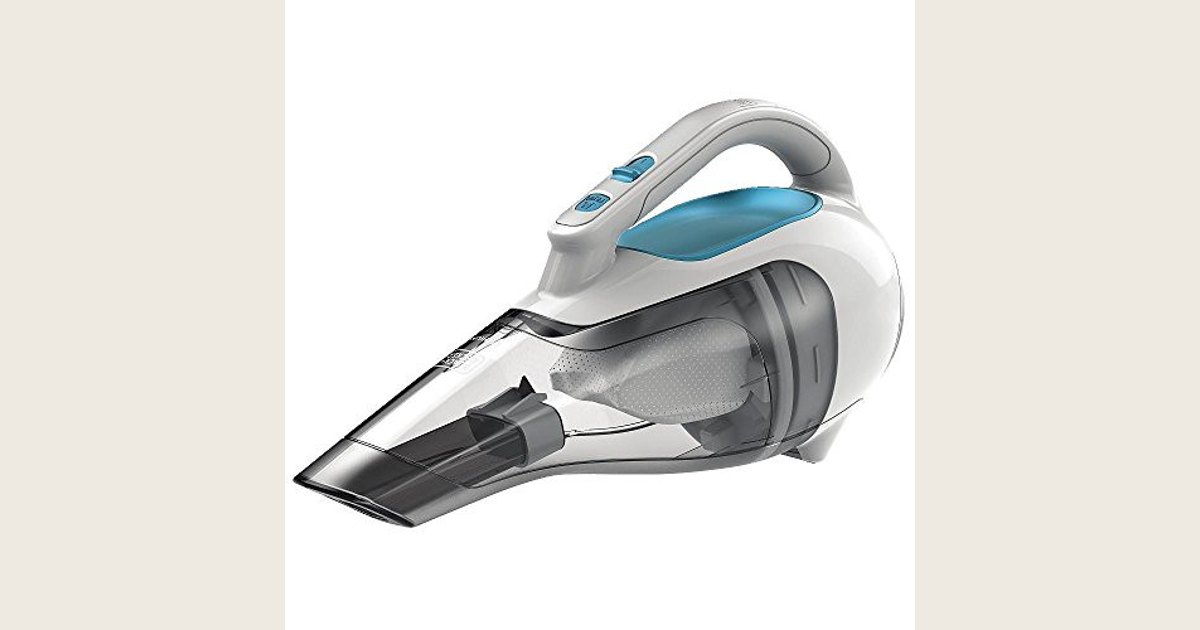
You can use a car vacuum at home if its power source and manual allow it. Rechargeable models can be used indoors after charging with the specified charger; household-corded models can be used as directed. A vacuum with a 12-volt vehicle plug cannot go straight into a wall outlet. Use a home adapter only if the manufacturer approves one for that exact model.
“Car” describes a cleaning use, not a universal power connection. Check the label and manual first, then use the right attachment for a small, dry cleanup. A compact vacuum may suit crumbs or a spot clean; a full-size vacuum is more practical for larger jobs.
Key Takeaways
- Identify the vacuum’s input and follow the model’s manual before using it at home.
- Use only the charger or adapter specified for your exact model; never improvise a connection from a vehicle plug to a wall outlet.
- Keep the job to surfaces and debris the vacuum is designed to handle. A car vacuum is not automatically a wet/dry vacuum or a replacement for a full-size cleaner.
First, check what kind of power your car vacuum uses
Look at the vacuum’s rating label and manual—not just its product name or the shape of a plug. Find the model number and the power-input details. A charging label can describe the charger rather than the vacuum’s motor, so check both the appliance and charger information if they differ.
| Power type | What to check before home use |
|---|---|
| Rechargeable battery | Charge with the included or manufacturer-approved charger, using the instructions for that model. |
| 12-volt vehicle-accessory plug | It is intended to connect to a compatible vehicle outlet. For home use, proceed only if the manufacturer lists a specific compatible household adapter for that model. |
| USB-powered | Follow the vacuum’s stated input and use a power source and cable the manufacturer permits; a familiar-looking USB connector alone does not establish compatibility. |
| Household AC cord | Check that the rating and outlet match the manual. Use an extension cord only if the instructions allow it. |
For example, BLACK+DECKER lists its HHVI315JO42 as a cordless 10.8-volt lithium-ion hand vacuum with a jack-plug charger, 400-milliliter bowl, and 15-minute runtime. Those details apply to that model, not every car vacuum (BLACK+DECKER HHVI315JO42). See our handheld vacuum buying guide for comparison tips.
If the vacuum has a 12-volt vehicle plug, do not connect it directly to a household receptacle or try to adapt it with loose wires, a cut cord, or an unverified converter. If the manual does not explicitly identify a compatible home power supply, treat the vacuum as vehicle-powered and use it only with the specified vehicle outlet.
Before you begin: gather the right equipment
Have the vacuum, manual, and correct power supply ready. Choose a dry area where cords can move safely. Select a small amount of dry debris on a surface approved by the manual; a car-use label does not mean the vacuum is suitable for liquids or every fabric. Check that the bin, filter, and attachment are fitted as directed. Do not use a unit, cable, or battery that appears damaged.
Step 1: Confirm that the power setup is approved
Start by matching the vacuum to a power source it was designed to use. This prevents a common mix-up: a vehicle accessory plug, a charger connector, and a household wall plug are not interchangeable just because they fit an adapter.
- Find the model number and look up its manual on the manufacturer’s support site if you do not have the booklet.
- Check the unit’s input rating and the charger or adapter’s output details. Confirm that the manual names the charger or adapter as compatible with that model.
- For a rechargeable vacuum, charge it using the specified charger and method. For a corded household model, use the outlet and any extension setup allowed in its instructions.
- For a 12-volt vehicle plug, stop unless the manufacturer specifically approves a home adapter for the exact model. Do not guess based only on voltage or a matching connector.
You are ready to continue when the power source matches the manual and the vacuum starts normally. If the power instructions are unclear, ask the manufacturer rather than testing a substitute adapter.
Step 2: Prepare the vacuum and the area
Set up the vacuum with its bin, filter, and chosen attachment correctly fitted. Clear away objects that could block the nozzle, and keep the cord out of walkways and away from places where it can snag. If using a battery model, check that it has enough charge for the task instead of stopping partway through to improvise a charging method.
For battery care, follow the product instructions when charging, using, and storing the unit. The U.S. Fire Administration advises storing lithium-ion batteries at room temperature when possible and not charging them below 32°F (0°C) or above 105°F (40°C). It also says to stop using a lithium-ion battery if you notice an odor, discoloration, excessive heat, a change in shape, leaking, or unusual noises (U.S. Fire Administration, “Battery Fire Safety,” last reviewed November 7, 2024).
Step 3: Choose a suitable surface and attachment
Use the narrow crevice tool for accessible gaps and edges, or a brush attachment for a surface the manufacturer says it can clean. Start gently on an unfamiliar upholstery or fabric surface, and stop if the tool pulls, snags, or marks it. If the manual lists only vehicle-interior uses, do not assume that every household surface is approved.
Keep the task modest: loose crumbs, grit, or other dry debris in a small area are practical targets if the vacuum is designed for them. Do not pick up liquids unless the manual identifies the model as suitable for wet pickup. For example, Dyson says its Car+Boat handheld can clean hard surfaces, upholstery, and mattresses at home or on the go, but specifically says not to pick up water or other liquids with that machine (Dyson Car+Boat handheld vacuum). That is a model-specific example, not permission for every car vacuum.
Step 4: Vacuum in short, controlled passes
Switch the vacuum on as its manual describes and move the nozzle slowly over the target area. Use the attachment that can reach the debris without forcing the nozzle against a delicate surface. Keep the intake clear; if pickup drops, switch off before checking for a clog or a full bin. Do not keep running a unit that makes an unusual noise, smells abnormal, or becomes unusually hot.
For a small spill of dry crumbs, work from the outer edge toward the center so debris does not scatter. Empty the bin when the manufacturer’s fill mark or instructions indicate it is time, rather than packing it beyond its intended capacity. If the job is much larger than a quick spot clean, pause and use a household vacuum with the appropriate capacity and floor tool instead.
Step 5: Switch off, empty, and store it as directed
Turn the vacuum off and disconnect it from power using the procedure in its manual. Empty the bin over a trash container, and clean the filter only as the manufacturer instructs. If a filter is washable, follow the model’s specific cleaning and drying directions before reinstalling it; do not assume that another vacuum’s maintenance routine applies.
Store the charger and vacuum in a dry place and keep the charger with the model it belongs to. For cordless models, use the specified charging equipment and follow the battery’s care guidance. If you noticed a battery warning sign, do not charge or keep using it as if nothing happened; follow the manufacturer’s support and disposal instructions.
When a household vacuum is the better choice
A car vacuum can be convenient for a small cleanup, a tight corner, or a quick pass over loose debris. A full-size household vacuum is usually more practical for several rooms, large carpeted areas, or a cleanup that needs a longer session and a floor head. Bin size and runtime vary substantially by model: BLACK+DECKER lists a 400-milliliter bowl and 15 minutes for the HHVI315JO42, while Dyson gives an “up to 50 minutes” figure for its Car+Boat in low mode with a non-motorized tool and notes that runtime varies with use. Neither figure is a promise for other vacuums or every cleaning mode.
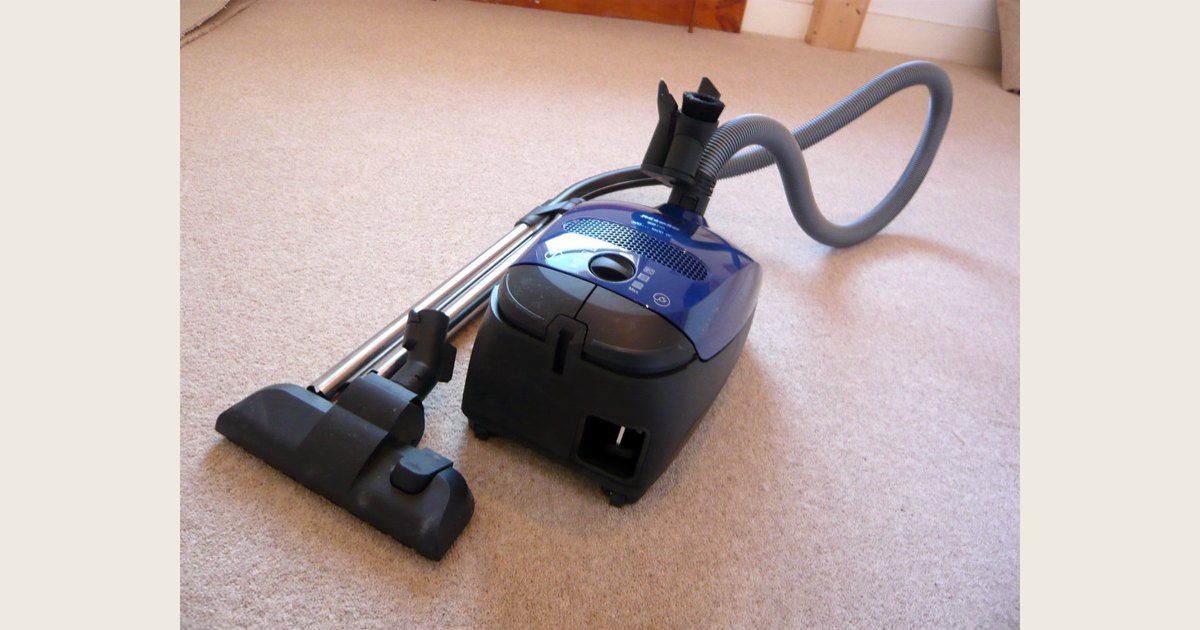
Photo: “365.294: Vacuum” by WordRidden, CC BY 2.0; resized and padded. Illustrative stock photo; no product testing is implied.
If you are comparing models rather than using one you already own, our cordless car vacuum guide explains the tradeoffs around runtime, filters, and battery-powered designs. For a small one-off mess, however, use what you have only when the power setup and instructions check out; there is no need to buy an adapter or another vacuum just to try the job.
Common problems and what to check
- It will not turn on at home: Confirm that the battery is charged with its intended charger, or that a household-powered model is connected as its manual specifies. A vehicle-accessory plug without an approved home supply is not a wall-plug model.
- Pickup is weak: Switch off, then check whether the bin is full, the nozzle is blocked, or the filter needs attention. Clean and reassemble parts only as the manual directs.
- The battery or vacuum smells odd, changes shape, leaks, or gets unusually hot: Stop using it. For a lithium-ion battery, these are among the warning signs identified by the U.S. Fire Administration; follow the manufacturer’s instructions for next steps.
- It takes too long or keeps needing emptying: The job may be beyond the capacity or intended use of a compact vacuum. Move to a household vacuum designed for the area rather than continuing to force a small unit through a large cleanup.
Frequently asked questions
Can I plug a 12-volt car vacuum into a wall outlet?
Not directly. Use it with its specified vehicle outlet unless the manufacturer identifies a compatible household adapter for that exact model. Do not substitute a generic power supply based only on a voltage number or connector shape.
Can I use a car vacuum on a couch or carpet?
Only if the manual permits the surface and you use an appropriate attachment. Start gently on an inconspicuous spot if you are unsure how the tool will interact with the fabric. A car vacuum’s name alone does not confirm that it is suitable for every carpet or upholstery type.
Can I vacuum up a drink spill?
Do not do so unless the manufacturer explicitly rates the model for wet pickup and explains how to use it that way. Many handheld vacuums are intended for dry debris; Dyson, for example, explicitly says not to pick up liquids with its Car+Boat model. Check your own manual rather than transferring instructions from another product.
Using a car vacuum at home comes down to three checks: match the power source, follow the model’s instructions, and keep the task within the vacuum’s cleaning limits. If any of those checks fail, use a household vacuum or wait until you have the approved power setup. For more help choosing a model for vehicle cleanups, see our handheld car vacuum guide.
Featured image credit: “BLACK DECKER dusbuster Handheld Vacuum, Cordless, Flexi Blue (HHVI315JO42)” by shop8447, CC0 1.0; resized and padded. Illustrative stock photo; no product testing is implied.