A portable car vacuum cleaner that runs cordless is easy to grab when crumbs or grit show up, so leaving it in the trunk can seem convenient. The safer default is not to make a parked car its permanent home when the vehicle may sit in heat or direct sun. If your vacuum uses a lithium-ion battery, the U.S. Fire Administration (USFA) advises keeping batteries out of hot cars and direct sunlight and storing them at room temperature when possible. Your model’s manual still controls its exact storage limits; a charging limit is not automatically a storage rating.
This guide explains what to check, when to bring the vacuum indoors, and what to do if it has already been left in a hot vehicle. There isn’t one universal safe temperature or storage rule for every cordless vacuum.
Key Takeaways
- Don’t use a hot, sun-exposed parked car as routine storage for a lithium-ion vacuum or its battery.
- Check the exact manual for storage, operating, and charging conditions; those limits are not interchangeable.
- Remove a battery only if the manufacturer designed it to be user-removable, and store it as directed.
- Stop using a lithium-ion battery if it becomes unusually hot, changes shape or color, leaks, smells, or makes odd noises.
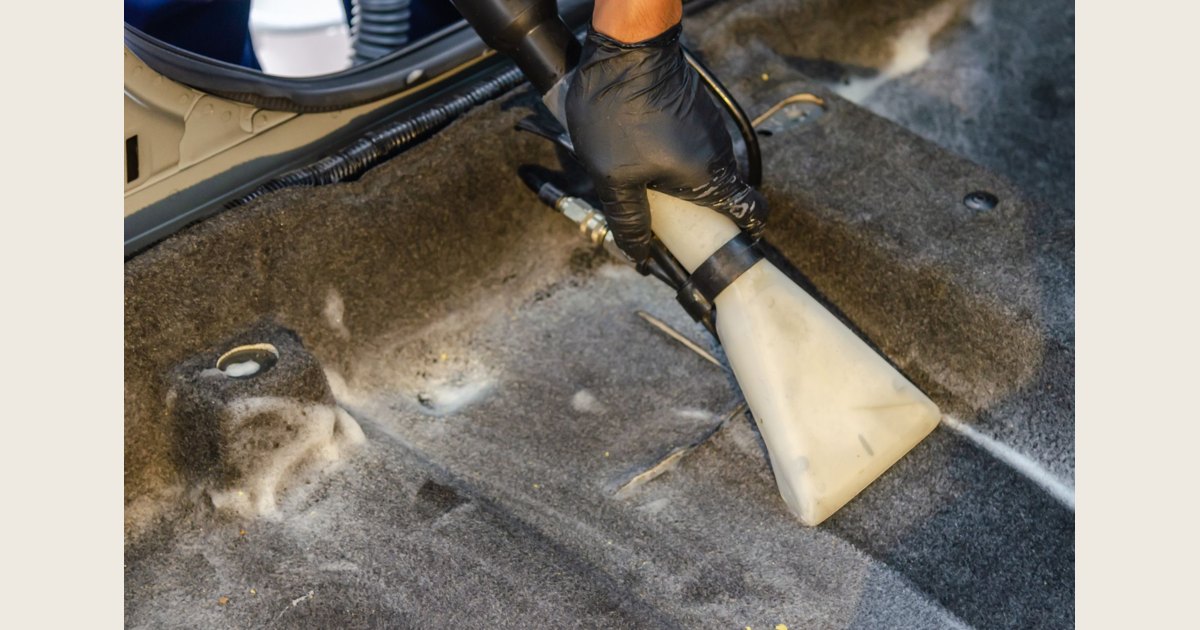
Featured photo: Illustrative stock showing a gloved hand vacuuming a car footwell; it does not show or test a particular cordless model. Photo by Khunkorn Laowisit on Pexels, used under the Pexels License. Resized and padded.

Why a parked car can be hard on a cordless vacuum
A parked vehicle can heat up quickly in the sun, even when the outdoor temperature seems manageable. The National Weather Service’s “Children, Pets and Vehicles” guidance says a parked car’s interior can rapidly reach dangerous temperatures. Its demonstration shows the cabin rising from a safe temperature to 94.3°F in just over two minutes; that is one demonstration, not a universal temperature curve for every vehicle or weather condition. The page also notes that dark interior surfaces can reach 180°F to above 200°F, and that slightly open windows do not significantly decrease the heating rate.
Those figures describe a vehicle demonstration and interior surfaces—not the temperature inside a vacuum’s battery. They do show why an outside-air reading, shade, or a cracked window cannot certify that a stored device stays within its manufacturer’s limits.
For lithium-ion batteries, USFA’s “Battery Fire Safety” guidance says to store them at room temperature when possible, not in direct sunlight or hot cars. The page, last reviewed November 7, 2024, also says not to charge them below 32°F (0°C) or above 105°F (40°C). Those are charging boundaries—not a complete storage-temperature range. Don’t treat any part of that charging range as permission to leave a vacuum in a parked car.
Check your vacuum’s manual before deciding
The right answer depends on the particular vacuum and battery. Before making a trunk, garage, or home shelf its storage spot, check the manufacturer’s instructions rather than borrowing a temperature limit from another model.
- Find the model number and the official manual. Look for sections labeled “storage,” “temperature,” “battery,” “charging,” or “transport.” Use the manufacturer’s document for your exact model, not a listing for a similar-looking vacuum.
- Separate storage limits from use and charging limits. A device may have different permitted temperatures for operation, charging, and long-term storage. If the manual gives only a charging or operating range, don’t assume it also covers storage.
- Confirm whether the battery is user-removable. If the manual does not describe battery removal as a user task, don’t pry open the vacuum or try to disconnect the pack. For a built-in battery, the whole vacuum needs to be stored according to the product’s directions.
- Compare the limits with the place you’ll leave it. Consider the actual parking location and season, not just the temperature when you arrive. A car can heat in sun, and an unheated garage can get very cold. If the manual does not state a storage range, contact the manufacturer; until you get an answer, indoor storage is the conservative choice.
You should be able to identify the battery type, the manufacturer’s storage instructions, and whether the planned location stays within them. If any of those remain unknown, don’t guess based on another brand or a brief test with a cabin thermometer.
Choose a storage plan for your parking conditions
Use the table as a decision aid, not as a substitute for your manual. If the instructions are more restrictive than the general USFA guidance, follow the product instructions.
| Situation | Practical choice |
|---|---|
| The car will sit in sun or become hot | Bring the vacuum indoors rather than leaving it in the vehicle as routine storage. USFA specifically warns against keeping lithium-ion batteries in hot cars or direct sunlight. |
| The car is parked in a climate-controlled space | Leave the vacuum there only if the manufacturer’s stated storage conditions cover that location. “Indoors” or “in a garage” does not by itself establish a temperature range. |
| The car may get very cold | Check the vacuum’s storage instructions. USFA’s 32°F lower threshold is about charging, not storage; don’t charge a lithium-ion battery below the stated charging limit. |
| The battery is removable by design | Remove it only as the manual directs, then store the battery and vacuum body under their respective instructions. If the pack is built in, bring in the entire vacuum. |
To avoid leaving the vacuum in a parked car, keep it at home and bring it along only when a cleanup is planned. A fixed car-wash vacuum may be another option for an occasional cleanup where one is available; it is a separate, stationary tool, not a cordless vacuum rated for vehicle storage.

This fixed car-wash vacuum is one alternative for a planned cleanup while your cordless vacuum stays at home; it is not a portable model or a battery-storage example. Photo by Stephen Andrews on Pexels, used under the Pexels License. Resized and padded. Illustrative stock image; no product testing is implied.

If you’re still comparing models, our cordless car vacuum buying guide covers suction, runtime, and filters. If you’d rather keep a vacuum in a garage or cleaning area, see our comparison of wall-mounted and portable car vacuums.
Before you put it away, switch it off and check it
First screen for signs of battery failure before touching or moving the vacuum. The U.S. Fire Administration (USFA) says to stop using a lithium-ion battery if it develops an odor, changes color or shape, becomes too hot, leaks, or makes odd noises. Don’t handle or relocate a device showing these signs. If there is smoke or fire, move away and call 911 from a safe location; don’t try to carry the vacuum outside. Ready.gov’s home-fire guidance says to leave during a fire, call 911 if you cannot get out or reach someone who needs help, and check with the fire department before re-entering after a fire.
For a device with no warning signs, follow its manual for emptying the bin, cleaning filters, and storing attachments; vacuum designs differ.
- Switch it off before stowing. Don’t leave the vacuum running or charging unattended in a parked vehicle. Charge it only with the supplied or manufacturer-approved charger and within the conditions specified for that model. USFA’s lithium-ion guidance says not to charge below 32°F or above 105°F; those are charging limits, not storage temperatures.
- Check again for changes before handling. If you notice unusual heat, an odor, discoloration, swelling or other shape change, leakage, or odd sounds, stop using it and follow the product maker’s safety guidance. Don’t charge it to test whether it still works.
- Secure a normal, intact vacuum for the trip. Use a compartment or case so it cannot roll into the driver’s footwell or interfere with vehicle controls. This is a transport precaution, not a reason to leave the device in a hot parked car afterward.
- Store removable spare batteries as directed. Remove a battery only if the manufacturer designed it for user removal. Follow its handling instructions and keep a spare away from direct sun, heat, and anything that can burn, as USFA advises.
If it has already been left in a hot car
Before approaching or handling it, look for smoke, fire, unusual heat, an odor, leakage, a change in color or shape, or odd noises. If it is smoking, burning, or there is a fire, stay away, leave the area, and call 911. Don’t try to pick up or move the vacuum, and don’t re-enter until emergency responders say it is safe.
If there are no warning signs and the vacuum is intact, bring it out of direct sun only when it is safe to handle, then check the manual before charging or using it. Wait until the battery is within the manufacturer’s permitted charging or operating conditions; don’t use USFA’s charging limits as a storage specification.
A normal-looking case does not confirm the condition of the cells inside. If the vehicle became very hot or the storage conditions are unknown, consult the manufacturer before using or charging the vacuum. Public guidance does not set a universal exposure-time test for car vacuums.
Common questions about cordless vacuum storage
Can I leave a cordless car vacuum in the trunk overnight?
There is no universal yes-or-no answer because overnight temperatures, sun exposure the next day, and the model’s storage rating all matter. Check the exact manual. If the vehicle may become hot or cold beyond the stated storage conditions, bring the vacuum indoors; don’t assume an overnight stay is harmless because the car is cool when you park.
Will a cracked window or shade make it safe?
Don’t rely on a slightly open window as temperature control: the National Weather Service says it does not significantly decrease a parked vehicle’s heating rate. Shade may change direct sun exposure, but it does not tell you whether the vacuum remains within its specified storage conditions. When in doubt, store the device indoors.
Should I remove the battery every time?
Only if the battery is designed to be removed by the user and the manual recommends or permits it. Don’t open a sealed vacuum to extract a pack. If removable, follow the separate storage directions for the battery and the vacuum; if not, bring the whole appliance to an appropriate storage location.
The practical rule
A portable cordless vacuum can ride in your car when you need it, but a parked vehicle is not a reliable all-season storage cabinet. For a lithium-ion model, take USFA’s warning about hot cars and direct sun seriously, and use the manufacturer’s specific storage limits for all other conditions. If you can’t verify that the car stays inside those limits, keep the vacuum at home and carry it out when needed.